Scootle webinars now available to watch on demand

If you missed our March 2026 Scootle webinars, you can now watch both sessions on demand and pick up practical strategies you can use straight away in the classroom.

Getting started with Scootle in the primary classroom

This session focuses on helping primary teachers quickly find relevant resources, organise them, and share them with students and colleagues. It’s a straightforward walkthrough designed to build confidence using Scootle in day to day teaching.


Watch the recording: Scootle primary classroom webinar recording

Using Scootle in secondary maths and science

For secondary teachers, this session explores how to locate subject specific resources and apply them in maths and science contexts. The focus is on finding the right content efficiently and using it to support teaching and learning.


Watch the recording: Scootle secondary maths and science webinar recording

Both webinars are hands on and classroom focused, with practical approaches you can apply immediately. They are also aligned with the Australian Professional Standards for Teachers, making them a useful addition to your professional learning.

If you are looking for ways to make better use of Scootle, or to support colleagues in doing the same, these recordings are a good place to start.

Scootle Resources for March 2026

With the busyness of Term 1 in full swing, Scootle saves you valuable time by curating free, curriculum-aligned resources from a range of providers from around Australia and beyond.  

This month, we have curated resources for Harmony Week and International Women’s Day, along with materials celebrating the work of Alison Lester, whose picture book Magic Beach was recently voted Best Picture Book of All Time. 

Login or register now to access the materials linked in this email, and many more.  

Magic Beach, Alison Lester’s classic picture book celebrating the wonders of nature, has been voted Best Picture Book of All Time by Guardian Australia readers. 

  • Year 1 students can explore imagination, rhyme, repetition and setting in two Alison Lester texts, ‘Imagine’ and ‘Magic Beach’, through a 10-lesson sequence Alison Lester author study.  (Arc, Vic DoE)   
  • Alison Lester – writing your own books is a 12-video resource suitable for Year 3-6 students, in which Alison Lester discusses aspects of her creative processes and guides students to create a book using digital technologies. It can be used to teach specific aspects of creative writing or illustrating. (NSW Gov) 

Harmony Week (17–23 March) celebrates diversity, inclusiveness, respect and a sense of belonging for everyone. 

  • Schools Standing up to Racism provides lesson plans suitable for primary school students. The Foundation-Year 2 and Year 3-4 units explore similarities and differences across cultural groups and practices and how these might be appreciated. The Year 5-6 unit explores implicit bias, including through literature and media. (Centre of Multicultural Youth) 
  • Let’s talk about racism helps Year 3-6 students understand racism as a form of discrimination, explaining what it can look like, its impacts and what students can do to stop racism. (Australian Human Rights Commission) 

International Women’s Day (March 8) is a global day celebrating the social, economic, cultural and political achievements of women. The day also marks a call to action for accelerating gender equality. 

  • In Mission: Gender Equality Year 7-8 students explore the definition of gender equality, its causes and consequences, and ways of promoting the concept. (World’s Largest Lesson). 
  • In Lesson Eight SDG #5: Gender Equality Year 9-10 students explore United Nations Sustainable Development Goal #5: Gender Equality. They research, watch videos, and engage in discussions to understand the importance of empowering women and girls for stability in societies. (World Affairs Council) 

You can find these resources together in a specially created Learning Path. 

New resources are regularly added to the Scootle collection. Login to see the latest free, curriculum-aligned resources for Australian educators. 

Get ready for 2026 with Scootle’s free planning resources

It’s that time of year again! You’ve got a new class, a new timetable, or a whole new role to figure out! But whether you’re looking for resources to help you through the first term, or plan for the whole year, Scootle has you covered! 

Login or register to explore the collection and find great resources to kickstart your planning for 2026. It’s free! 

Subject-specific learning sequences 

These subject-specific collections are jam-packed with lesson ideas, supportive pedagogy and classroom-ready resources for your students. We’ve picked a resource or two from each suite to get you started. 

  • reSolve mathematics lesson sequences are inquiry-based and aligned to the Australian Curriculum from F-10, and have professional learning integrated, in context, in the lessons. 
    Check out the Year 6 sequence Statistics: Loopy aeroplanes as a great context for classroom statistical investigations, or Mathematical modelling: Playing with fire for Year 9, which uses simulations and modelling to make decisions about bushfire predictions. 
  • The Literacy Hub is a huge resource for literacy professional learning and effective practice – but did you know that it recently published a new set of downloadable phonics lesson packs for Foundation to Year 2? Find them here: Phonics and morphology lesson packs for teachers 
  • The Australian Sports Commission has partnered with national sporting organisations to present a selection of lesson plans for primary school covering 18 different sports. Scope out the Netball lesson plans, and browse the whole suite while you’re there. 
  • These Global Education lesson plans for Years 3 to 10 explore what it means to be a solutions-focused global citizen and are aligned to HASS, Geography, Civics and Citizenship, and History, with links to Science. Challenge your students to engage with global issues such as Working together: gender equity or Environmental resilience. 

Cross-curricular resource banks for planning and teaching 

We’d like to share the large resource collections on Scootle that cover a range of curricula and year levels. Remember – these are all free, quality resources that are curated for you by teachers in the Scootle team. 

  • There are over 2000 free F to 10 lesson plans published on Arc across English, Maths, Science and Design technologies – with more being published regularly!  

This lesson sequence engages Year 1 students in the fascinating mechanics of popup books and is a great way to bring Design and technology into your classroom. 
Or for the Year 8 science classroom, this Introducing cells sequence will get your students started with using microscopes and drawing what they see. 

  • The OER Project hosts a plethora of teaching and learning resources focusing on Historical thinking skills and climate futures. This lesson about historical scale will help your students compare the timescale of their own lives verses the billions of years of Earth’s history. 

New resources are regularly being added to the Scootle collection. Login to see the latest free, curriculum-aligned resources for Australian educators. 

Create structured, curriculum -aligned learning with Scootle learning paths


Learning paths make it easy to organise digital resources into a clear, structured sequence that supports student learning. They help you bring together multiple types of digital resources into guided progressions to use with your students.

Learning paths are flexible and classroom ready. You can:

  • curate resources that build knowledge step by step
  • personalise instructions, questions and context for your class
  • reorder items to support a logical learning journey
  • share a single PIN so students can access everything without logging in

They can also be edited to create student activities and curated, annotated topic-based lists that are easily exported and shared by email or PDF.

If you want to see exactly how to create one, watch the short video at the top of this page. It walks through the process and shows how to get started.

Scootle’s shared learning paths also offer a growing shared collection created by educators across Australia, check them out on the Scootle website!

Learn how to access our portal


Finding reliable, curriculum-aligned digital resources can be time consuming. Scootle brings everything together in one place, giving educators fast access to high-quality, classroom-ready materials that support the Australian Curriculum.

If you’re new to Scootle, watch the video above for a quick guide to accessing the portal and creating your account.

Register today!

Why register?

Registered educators can:

  • access the full catalogue of free digital resources
  • save favourites and create personalised collections
  • build learning paths for students
  • browse interactives, games, videos and lesson materials across all subjects

Who can register?

Scootle is free for educators working in Australian schools and student teachers.

How to register

There are two ways to sign up:

  • Education network login: If your school is part of an eligible Australian education network, you may be able to log in using your existing credentials.
  • Self registration: Educators in independent schools and preservice teachers can register with a .edu.au email address.

Having trouble registering with the email you use for teaching? You can contact us for support.

Not a practising or preservice teacher? You can still browse using guest access.

Browse today!

Introducing new learning sequences

We’re excited to introduce the new Scootle learning sequences. Developed by ESA, these sequences make it easier for teachers to access high quality F to 10 resources in areas where free curriculum support can be limited. New sequences will be added regularly, giving you a steady stream of fresh, classroom ready content to explore.

Log in or register to explore the first two sequences and many more free, curriculum aligned materials, including:

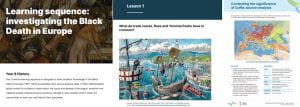
Learning sequence: investigating the Black Death in Europe (History, Year 8)

In this three lesson History sequence, Year 8 students learn about the Black Death in Europe through a series of guided, classroom ready tasks. The sequence encourages students to think critically about the causes and consequences of one of history’s most devastating pandemics. Using Scootle’s extensive bank of high quality resources and scaffolded learning tasks, students compare diverse sources of evidence and make informed judgments about how each one contributes to historical understanding.

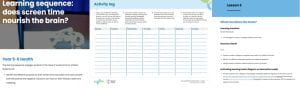
Learning sequence: does screen time nourish the brain? (Health and Physical Education, Years 5–6)

In this five lesson Health and Physical Education sequence, Year 5 and 6 students explore how to care for their physical and mental wellbeing by developing healthy screen time habits. Students examine and critique information about screen time from a range of sources and make personal decisions based on their analysis. They are supported by thinking organisers that help them make sense of the competing wants and needs shaped by screen technology.

Grounded in research

These sequences are grounded in the latest evidence base for effective teaching practice (AERO, 2023; CESE, 2025) and are carefully scaffolded to build students’ knowledge and skills. Incorporating strategies such as explaining, demonstrating, modelling, collaboration and independent practice, they create rich opportunities for students to deepen understanding, refine ideas and skills, and demonstrate their learning.

Crafted for the classroom

Designed to enhance existing teaching programs, the sequences target specific teaching and learning goals and purposefully integrate curriculum content and skills. This approach strengthens curriculum coverage and creates opportunities to build students’ learning capacities.

Each sequence is fully resourced and classroom ready, so teachers can focus on teaching. The hard work of finding the right materials has already been done.

Ongoing development, responsive to teacher needs

As Scootle’s collection grows with new and updated resources, the range of learning sequences will continue to expand. If you have a topic in mind, let us know how we can best support your teaching needs.

Remember to login or register to explore the new learning sequences and many more free, curriculum aligned resources. To stay up to date with the latest Scootle news, sign up to our newsletter. We only email once or twice a month, and we never share your information with third parties.

References

Australian Education Research Organisation (AERO). 2023. How students learn best. https://www.edresearch.edu.au/resources/how-students-learn-best

Centre for Education Statistics and Evaluation (CESE). 2025. What Works Best 2025: Evidence guide for excellent schools. NSW Department of Education.

New global education resources for your 2026 planning

Now, perhaps more than ever, our students are impacted by global trends and events and need tools to understand what is going on in the world. This month, we focus on the theme of global education and some resources that will help you embed global perspectives in your planning for 2026. 

Login now or register to access free, curriculum-aligned materials linked in this email, and many more!  

New teaching units 

Hot off the press is a set of curriculum-aligned classroom resources focusing on Australia and our immediate neighbours in the Indo-Pacific.  All units include lesson plans and student worksheets. 

  • In Our global responsibilities Year 10 students explore the cooperative and diplomatic processes that countries adhere to when working together on global issues. 
  • Working together: gender equity helps Year 10 students to investigate the ways in which Australians work with neighbouring countries to promote greater gender equality.  
  • Via a Year 7/8 unit titled Environmental resilience , students investigate the sustainable development of Pacific Island nations and develop an environmental resilience scenario-based strategy.   
  • Our Indo-Pacific community supports Year 3/4 students to explore the geographical and cultural diversity of the region and create a proposal for a hypothetical partnership project. 

Stay Tuned to our Planet (STTOP) 

Find lessons on a variety of Global Ed themes including Support All Life – Future Foods; You and Your Community – Energy use Innovation and Creativity – Upcycling; and You and Your Community – Waste. Age levels of the lessons vary according to topic.  

Develop your teaching practices with Global Ed  

  • Global Education hosts a framework for global education, a Teaching Strategies PDF and appropriate Thinking Tools templates. 
  • SDG Lesson Plans for New Zealand Teachers focuses on themes from the Sustainable Development Goals (“Sustainable food”, “Cities”, “Women and equality” etc.), providing multiple activities and media sources to help explore that theme. Age levels of the lessons vary according to topic. 
  • Active Citizens: Globally connected, locally engaged is designed for use with adults, however some of the learning activities are suitable for use in secondary classrooms. Find learning activities exploring identity, cultural understandings, managing difference and conflict. 

Spring into learning with Scootle’s Weather and Seasons Learning Path

As winter gives way to spring in the south and those in the north of Australia prepare for the wet season, it’s the perfect time to explore Scootle’s engaging, curriculum-aligned resources on weather and seasons, curated together in a Weather and Seasons Learning Path.

Indigenous seasons

Explore Indigenous perspectives on seasonal change through a range of curriculum resources: 

  • For students in Foundation to Year 8, Indigenous weather knowledge (Bureau of Meteorology) offers an interactive map of traditional weather and climate knowledge.
  • The video series Many lands, many seasons (ABC Education) introduces Year 5–8 students to six Aboriginal seasonal calendars, providing rich cultural insights.
  • Seven seasons (Digital Technologies Hub) is an investigation for Year 9–10 students into Indigenous seasonal calendars. Based on their findings, students develop a searchable database.

Interactive maps and data

Interactive tools and datasets offer students hands-on opportunities to explore weather and climate patterns: 

  • Wind, rain, and temperature maps (Ventusky) offers an engaging way for Year 4–10 students to explore real-time and forecasted meteorological conditions through dynamic, easy-to-read visuals.
  • For Year 7–8, Climate data online (Bureau of Meteorology) provides access to historical weather records and climate statistics dating back to the 1800s.
  • Weather forecast from the stratosphere (Digital Technologies Hub) introduces Year 7–8 students to data analysis using real weather balloon data and spreadsheets.

Activities

Students can deepen their understanding of Earth’s systems and climate through a variety of engaging lessons and activities: 

Learning sequences

We have curated a range of learning sequences to help students explore the impact of weather and climate on daily life.  


New resources are regularly being added to the Scootle collection. Log in to see the latest free, curriculum-aligned resources for Australian educators. 

Kick goals in the classroom this finals season

All around Australia, pies are warming, whistles are blowing, and car horns are tooting —it’s sporting finals season. Whether your team is leading the pack, or your hopes have turned to ‘next time’, Scootle offers a range of curriculum-aligned resources can help motivate your students all the way to the final siren of the school year.

Log in or register to access curriculum-aligned materials.

These game-based activities from the Australian Sports Commission and the New South Wales Department of Education will prime your students for learning:

Engage your middle years students with resources linking sport with maths, science, or digital technology:

Go back in time to learn about Australia’s obsession with sport, including exploring its darker side:

Or see how HPE teachers are demonstrating good teaching practices in these Illustrations of Practice.

Bring the sciences to life!

Primary Connections resources are some of the most popular teacher resources available on Scootle, providing primary science teaching sequences aligned to the Australian Curriculum V9, including Finding features (Foundation), Scorching swings and slides (Year 3), and Communication matters (Year 5).

Alongside Primary Connections, Scootle offers curated a range of resources to help you engage your students in the chemical and physical sciences. With National Science Week coming up early in Term Three, now is a great time to check out the following comprehensive lesson sequences, modules, investigations, design challenges and interactive simulations, to help you with your planning!

The scientific journey

Explore engaging lesson plans and resources to bring the chemical and physical sciences alive in your classroom. Guide your students through the stages of discovery:

Explore F-2

Chemical

  • The chairs for bears module for Foundation students investigates the common design features of chairs, and explores how different types of chairs fit different sized people, and have a range of purposes. (WA Department of Education)
  •  Year 2–4 students can explore the physical properties of natural materials and how they can be changed or combined in this transportation innovation design challenge. (Queensland Museum)

Physical

  • Introduce the concept of push / pull forces with your Year 1 and 2 students using the Indigenous spinning tops investigation, or explore how magnetism and electrostatic electricity can move objects without directly touching them. (Connected Learning Experience)

Investigate 3-6

Chemical

  •  Use this DIY lava lamp lesson plan to enable students from Year 3–10 to observe chemical reactions and learn about the density of fluids. (NSW Department of Education)
  • Students in Year 6–7 can create a solar still to investigate how coloured salty water transforms into clear unsalted water, in this solar still activity. (Waterwise Queensland)

Physical

  • Engage Year 5–6 students in the interactive simulation circuit construction kit: DC, where students build a DC circuit with wires, batteries and various components, and experiment with conductors and insulators. (University of Colorado Boulder)

Build 7-10

Chemical

  • Explore the connections between chemistry and food with your Year 7–8 students in this food innovation and molecular gastronomy lesson, experimenting with molecular gastronomy techniques and designing innovative food solutions. (The GiST)
  • Build a molecule is an interactive simulation challenge in which Year 8 and 9 students need to build molecules from atoms, construct molecules from the chemical formula and experiment with combining atoms to build larger molecules. (University of Colorado Boulder)
  • Year 10 students can learn about how genetics and DNA are inherited from parents in fertilisation, as well as how DNA replicates itself, through a sequence of 15 lessons in the atomic structures unit. (AERO and Ochre).

Physical

  • Perhaps challenge Year 7 students to make kinetic sculptures that animate a character or scene, using a simple crank slider mechanism, with cranky contraptions. (Exploratorium)
  • FLEET Schools: Forces and energy contains a terrific collection of learning activities for Year 8–10 students to explore the concept of energy and why it is crucial to our understanding of how everything in the universe works – from sub-atomic particles to the sun, mobile phones and the universe itself. (Fleet)
  • In the falling for gravity activity, Year 10 students can calculate the acceleration of gravity using simple materials, a cell phone, and a computer to record, watch, and analyse the motion of a dropped object. (Exploratorium)

These resources can also be found in the Chemical Science Learning Path or the Physical Science Learning Path.

New resources are regularly being added to the Scootle collection. Log in to see the latest free, curriculum-aligned resources for Australian educators.

Subscribe By Email

Get every new post delivered right to your inbox.

This form is protected by reCAPTCHA and the Google Privacy Policy and Terms of Service apply.